

Jedzenie, które przetrwało pokolenia
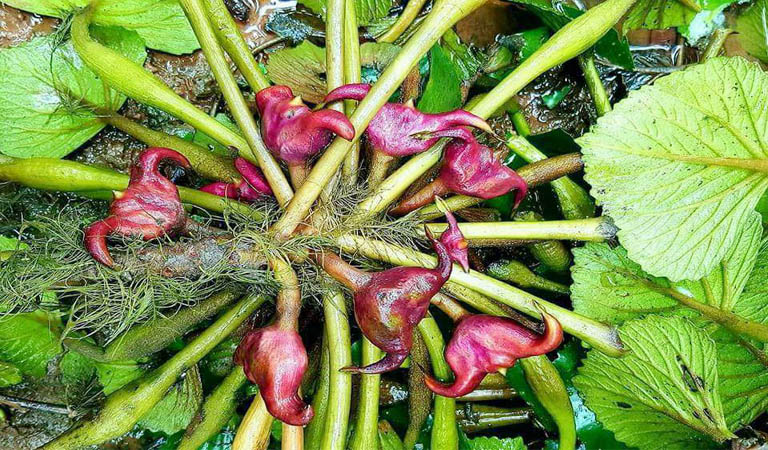
Jedną z najciekawszych rzeczy dotyczących kotewek wodnych jest ich historia.
Ludzie zbierają i jedzą je od stuleci.
W niektórych regionach były ważnym produktem sezonowym.
W innych krajach stały się składnikami tradycyjnej mąki i potraw.
Współcześni konsumenci mogą odkryć je za pośrednictwem mediów społecznościowych i zastanawiać się, czym one są.
Jednak dla rodzin, które jedli je od najmłodszych lat, nie ma w nich nic tajemniczego.
To po prostu znany nam pokarm z wody.
Czy można je uprawiać w domu?
Kotewki wodne są roślinami wodnymi, więc ich uprawa nie jest tak prosta, jak posadzenie nasion w zwykłej glebie ogrodowej.
Wymagają odpowiednich warunków wodnych.
In addition, growing certain species may be regulated or restricted in some regions because some Trapa species can become invasive.
That’s an important environmental consideration.
Before intentionally cultivating or releasing aquatic plants, check local regulations and guidance.
Never release unfamiliar aquatic plants into natural waterways.
An Important Environmental Issue
Some water caltrop species have become invasive in parts of the world.
They can spread rapidly under favorable conditions and form dense mats across the surface of waterways.
Those dense growths can interfere with:
- Boating
- Fishing
- Recreation
- Light penetration
- Native aquatic plants
- Water movement
So while water caltrops are traditional foods in some places, they can also be considered problematic invasive plants elsewhere.
The species and location matter enormously.
So, How Should You Prepare Them?
If you have positively identified the fruit as an edible water caltrop and know that it came from a reliable food source, a traditional preparation is straightforward.
Step 1: Clean them
Rinse the exterior thoroughly under clean running water.
Because the fruits come from aquatic environments, don’t skip this step.
Step 2: Cook them thoroughly
Boiling or steaming is commonly used.
Follow a trusted recipe for your specific species and size rather than relying on an arbitrary cooking time.
Step 3: Let them cool
The shells can become hot and difficult to handle.
Allow them to cool enough to work with safely.
Step 4: Remove the shell
Carefully crack or cut away the hard exterior.
Avoid the pointed projections.
Step 5: Eat the cooked kernel
The pale interior can be eaten as a simple snack or incorporated into other recipes.
What Should You Not Do?
Don’t:
Eat an unidentified wild fruit simply because it looks like something you’ve seen online.
Don’t:
Assume that every water caltrop from every region is equally safe.
Don’t:
Eat aquatic plant material raw without understanding the food-safety risks.
Don’t:
Consume fruits that appear spoiled or contaminated.
And don’t:
Release leftover live plants or seeds into local waterways.
These precautions are simple, but they’re important.
Przeczytaj więcej, klikając przycisk ( DALEJ »» ) poniżej!


